Learning at Recognise
Every stage of childhood is different. Our curriculum changes as children grow, but our approach remains the same: high expectations, individual attention and a school where children are known well. Reception to Year 11, our curriculum follows the English education system while being adapted to our international community in Shenzhen. Throughout every stage of the school, children are encouraged to become increasingly confident, independent and academically ambitious.
Reception (Ages 4-5)
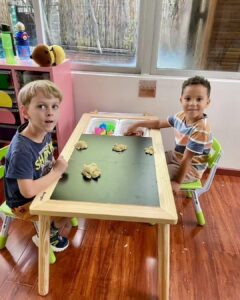
For many families, Reception is the beginning of a child’s school journey. It is an exciting milestone, but it can also feel like a big step for both children and parents. Our aim is to make that transition a happy and confident one by creating a calm, caring environment where every child quickly feels safe, valued and part of the school community.
Our Reception class follows the Early Years Foundation Stage (EYFS) curriculum from England, providing children with a broad and carefully balanced introduction to school life. Through a combination of structured teaching, purposeful play and exploration, children begin to develop early reading, writing and mathematical skills while also growing in confidence, independence, communication and physical development.
Because our classes are small, teachers quickly come to know every child as an individual. Some children settle immediately, while others need a little more reassurance as they become familiar with new routines and friendships. Our close relationships with families allow us to support each child at the pace that is right for them, helping school become somewhere they feel secure, confident and eager to return each morning.
We believe children make the best start when they feel secure enough to be curious, confident enough to ask questions, and excited to discover something new every day. By the end of Reception, children have developed strong foundations in literacy and numeracy while also gaining the confidence, independence and enthusiasm that prepare them for the next stage of their education.
Primary ( Ages 5-11 )
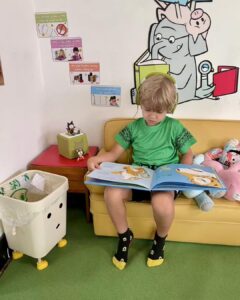
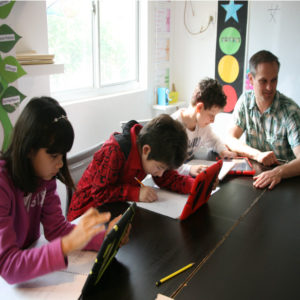
Our Primary programme follows the English National Curriculum and provides children with secure foundations across English, mathematics, science, humanities, computing, art, music, physical education and Chinese. As children move through the primary years, they steadily develop the knowledge, skills and confidence needed for the greater independence of secondary education.
Small classes allow teachers to know every child well. Lessons combine whole-class teaching with small-group work and individual support, enabling each pupil to make consistent progress at an appropriate pace. We expect children to work hard, but we also want them to enjoy learning and develop the confidence to tackle new challenges.
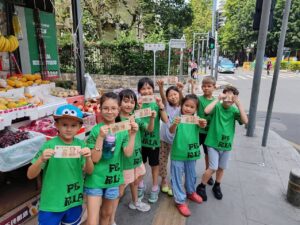
As children grow, they are encouraged to think independently, ask thoughtful questions and explain their ideas clearly. Curiosity is valued alongside knowledge, and our teachers regularly build on children’s interests to deepen understanding across the curriculum. Practical activities, creative arts, sport and educational visits all contribute to a balanced education that develops the whole child as well as their academic ability.
By the end of Primary, our pupils have developed strong study habits, increasing independence and a genuine enjoyment of learning, providing an excellent foundation for the challenges of secondary school.
Secondary (Ages 11–16)
Our Secondary programme follows the English National Curriculum in Years 7–9 before students begin their chosen examination pathway. Small classes allow teachers to maintain high expectations while adapting lessons to the needs, interests and pace of each individual. As students mature, they are encouraged to take increasing responsibility for their learning while continuing to benefit from close academic guidance.
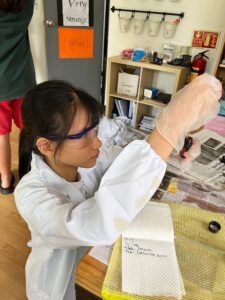
Lessons are discussion-based, practical where appropriate and designed to develop confident, independent thinkers. Students are expected not simply to remember information, but to question, investigate and apply their understanding across a broad range of subjects. Because classes are small, teachers are able to extend students who are ready for greater challenge while providing additional support wherever it is needed.
One of the strengths of Recognise is that academic ambition is determined by the individual rather than by the year group. When a student demonstrates the ability and enthusiasm to tackle more advanced work, we encourage them to do so. Over many years, we have seen students make exceptional progress because they are challenged according to their potential rather than limited by age-based expectations.
From the age of fourteen, students begin to make important decisions about their future education. Many prepare for Cambridge IGCSE examinations, internationally recognised qualifications that provide an excellent foundation for A Levels, the International Baccalaureate and other post-16 courses around the world. Others may follow a route towards an American High School Diploma or another programme better suited to their future plans. Because our school serves an international community, we recognise that every family’s circumstances are different and provide individual guidance throughout this process.
Whether students continue their education in the United Kingdom, China, Hong Kong, the United States or elsewhere, our aim is the same: to ensure that every young person leaves Recognise with the confidence, knowledge and qualifications needed for the next stage of their education.

Students study
Reception
Ages 4-5
(Reception)
Curriculum
Early Years Foundation Stage (EYFS)
Learning includes
Communication & Language
Early Reading & Phonics
Early Writing
Mathematics
Physical Development
Personal, Social & Emotional Development
Understanding the World
Expressive Arts & Design
Outdoor Learning
Chinese
Lower Primary
Ages 5-7
(Years 1-2)
Curriculum
English National Curriculum – Key Stage 1
Subjects
English
Mathematics
Science
Humanities
Computing
Technology
Art & Design
Music
Physical Education
Chinese
Upper Primary
Ages 7-11
(Years 3-6)
Curriculum
English National Curriculum – Key Stage 2
Subjects
English
Mathematics
Science
Humanities
Computing
Technology
Art & Design
Music
Physical Education
Chinese
Lower Secondary
Ages 11-14
(Years 7-9)
Curriculum
English National Curriculum – Key Stage 3
Subjects
English Language & Literature
Mathematics
Biology
Chemistry
Physics
World History
Geography
Computing
Art
Music
Physical Education
Chinese
Upper Secondary
Ages 14-16
(Years 10-11)
Curriculum
Cambridge IGCSE
English Curriculum KS4
Individual learning pathways
Typical subjects
English Language
English Literature
Mathematics
Biology
Chemistry
Physics
World History
Geography
Computing
Art
Chinese
Chinese Language Learning
Living in China gives our students a wonderful opportunity to develop one of the world’s most important languages. At Recognise, our students range from complete beginners with no previous experience of Mandarin to fluent native speakers who use Chinese as their home language. Rather than teaching by age alone, we place students into small groups according to their current level, allowing every child to work at an appropriate pace and make confident progress.
Our Chinese teachers adapt lessons to meet the needs of each group. Students who are new to the language develop practical speaking, listening, reading and writing skills through engaging, supportive lessons. More advanced learners continue to extend their literacy, vocabulary and written Chinese, with some students following the same textbooks and curriculum used in local Chinese schools where this is appropriate.
For families wishing to pursue recognised qualifications, students may also work towards the internationally recognised HSK (Hanyu Shuiping Kaoshi) examinations. These qualifications range from beginner to advanced levels and provide a clear pathway for measuring progress in Chinese language proficiency.
We are also able to work closely with families to provide additional challenge or extension work where appropriate. Whether a child is taking their first steps in Mandarin or is already a confident Chinese speaker, our aim is the same: to help every student continue making meaningful progress while developing confidence and enjoyment in the language.